
Fostering Tribal Communities for Livelihood Promotion through Eco-Friendly Honey Harvesting in the Forest Habitations of Mandla District of Madhya Pradesh
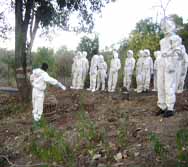 The traditional honey hunters in all the nine blocks of Mandla district of Madhya Pradesh who are mostly tribals; Gond, Baiga, Pradhan etc. and reside in the forest villages or close to forest habitations are organised in to groups and trained for scientific and eco friendly honey harvesting. The rock bee is the largest producer of honey among Indian bees and its one honeycomb yields between 5 and 15 kg of honey. Honeybees generally inhabit deep ridges, large trees and green cover near water bodies as it considers these places to be safe and secure from human interventions. The traditional way of honey collection results in large-scale destruction. The scientific technique of honey harvesting has made the task easier and now it’s possible to extract honey more than once from a single honeycomb without its destruction and without killing or displacing the bees. Hence, honey hunting is being thought of as an additional source of income for the villagers, not only a pass time occupation.
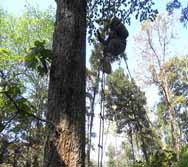 CARD has been organizing traditional tribal (non-tribals also) honey hunters into Self Help Groups, upgrade their skills, arranging modern hygienic procurement and processing facilities, and to provide value addition by introducing quality control, packaging, branding, certification and establishing marketing linkages. The initiative was initially supported by the Canda Fund for Local Initiative (CFLI) in establishing a honey processing plant which is one of the largest plants in MP. The tribal youth were trained in non destructive harvesting techniques and were provided kits and protective dresses through TRIFED and SGSY support.
A loosely knit tribal honey hunter’s federation was established in the name of Maikalsutta. The members (22 groups) after training in non destructive eco friendly honey harvesting techniques pledged not to destroy honey comb and kill bees. This was further authenticated by the Gram Panchayat. Managed by CARD the Maikalsutta was unable to cross 2 tone honey sale. This is where SRTT also provided small support. The average annual sales are of 5 tons, meaning that around Rs 6 lakh is regularly distributed to the members.